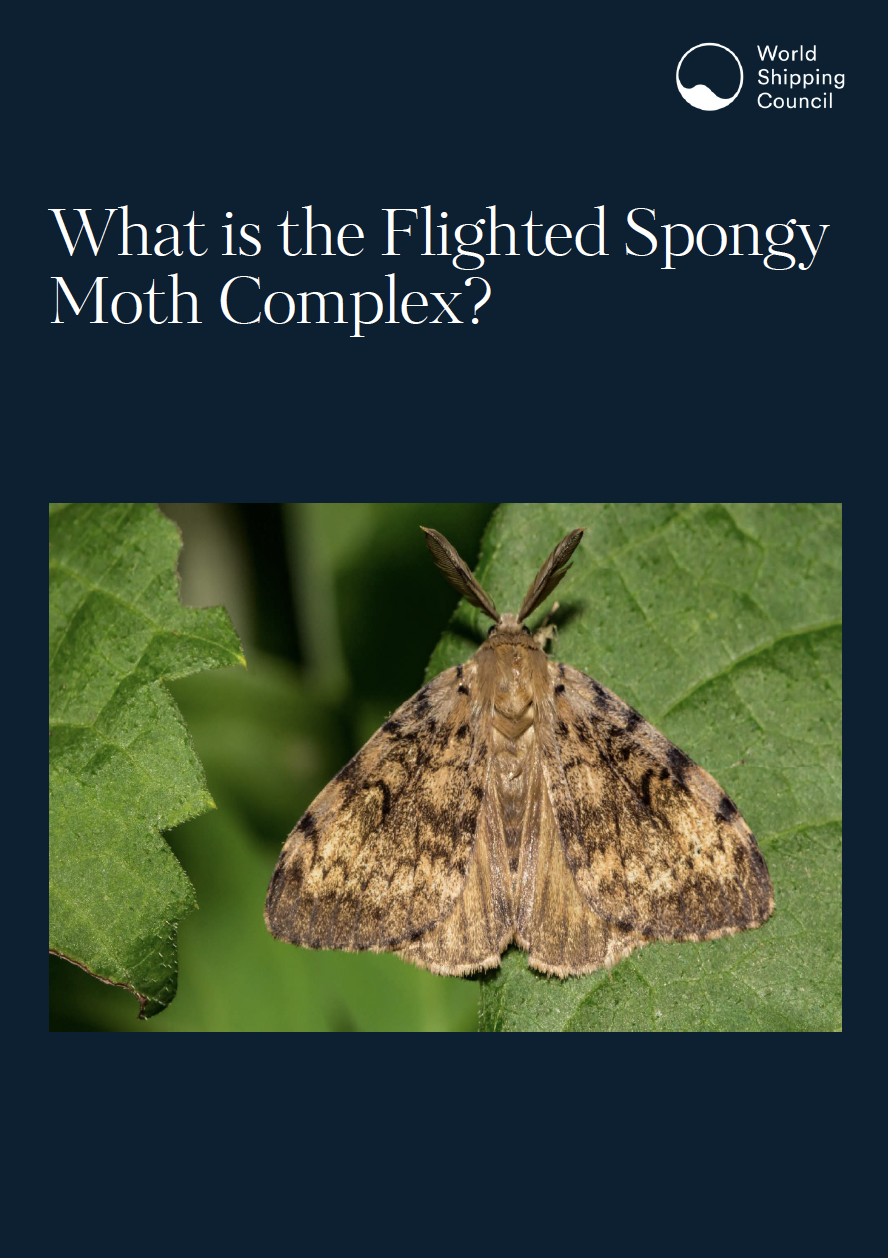
The Flighted Spongy Moth Complex
What is the Flighted Spongy Moth Complex?
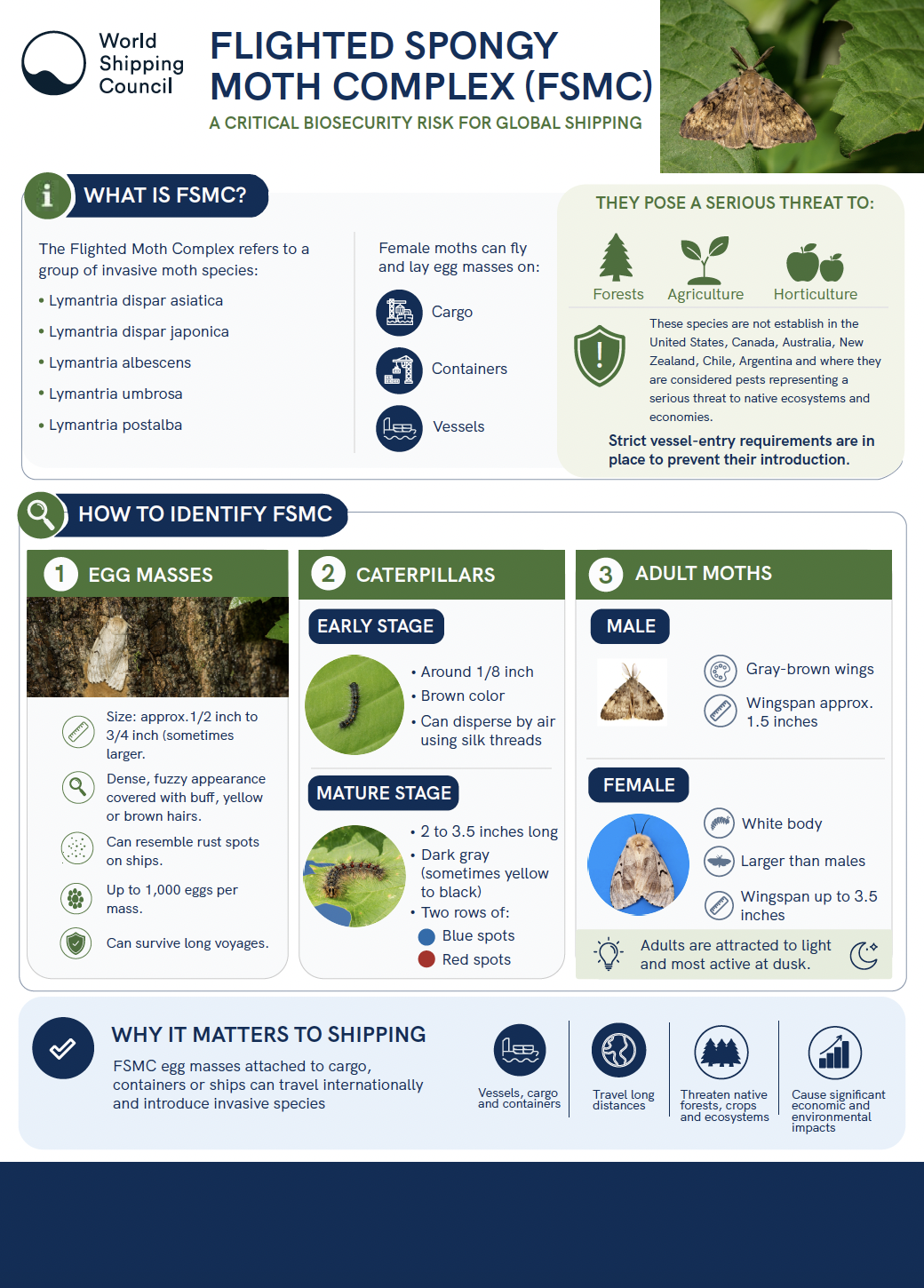
The Flighted Spongy Moth Complex refers to a group of Lymantria species, including L. dispar asiatica, L. dispar japonica, L. albescens, L. umbrosa and L. postalba.
Flighted Spongy Moth Complex females can disperse widely, being able to lay egg masses on vessels, cargo and outdoor surfaces. These species are not established in the following countries: United States, Canada, Australia, New Zealand, Chile and Argentina and where they are considered pests representing a serious threat to the native forests, horticulture and agriculture.
These countries have therefore imposed requirements on shipping to reduce the risks of FSMC infestations.
These requirements are summarized below.
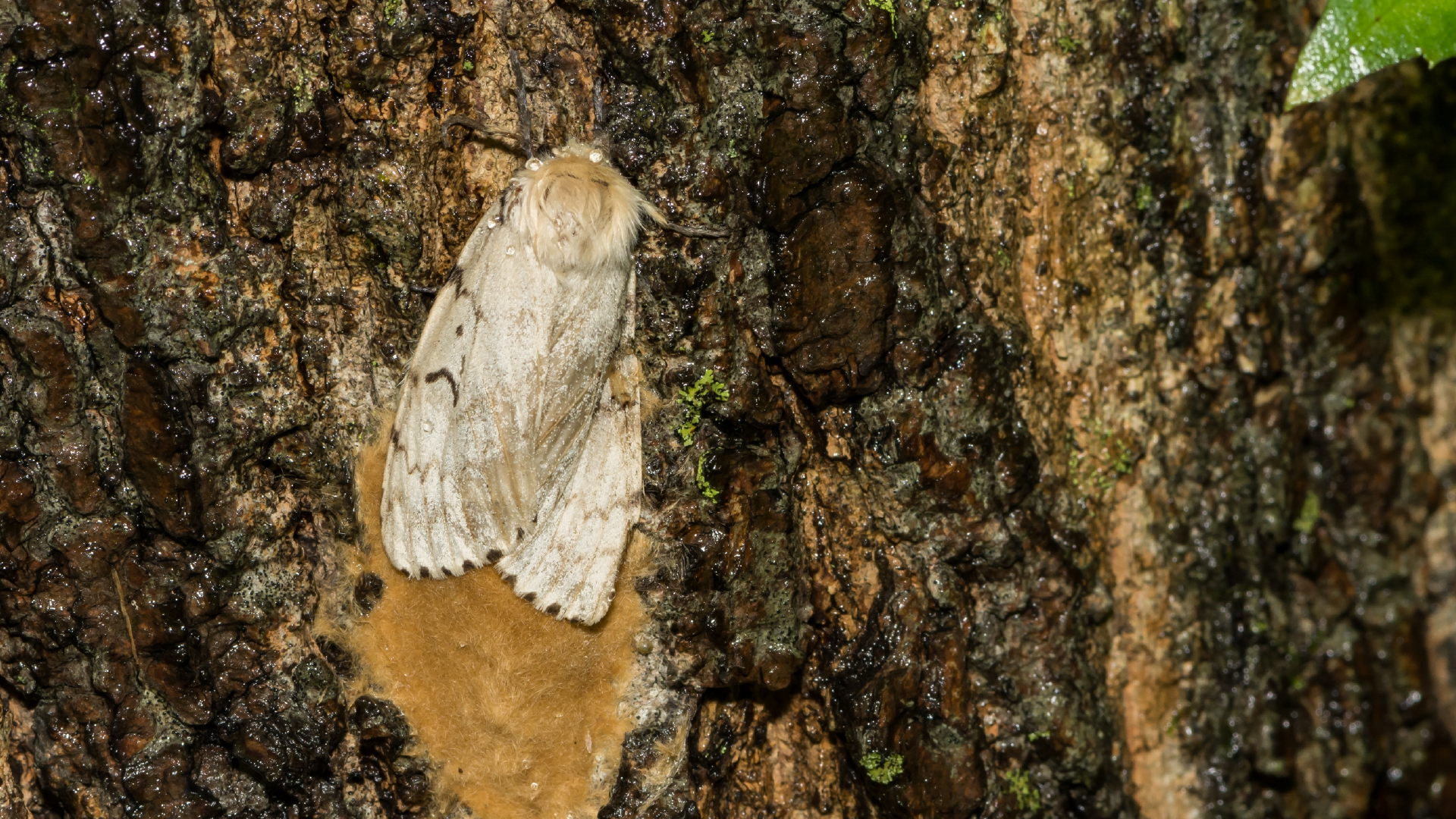
The egg masses can be approximately 1 ½ inches (3.81 cm) long and 3 ½ inches (8.89 cm) wide, but in some cases, they can be larger. In terms of appearance, egg masses can look very close to rust spots on ships. The masses are dense and fuzzy covered with buff, yellow or brown hair. Each mass can contain up to 1000 eggs and is able to survive during long transit distances.
Egg Masses Identification
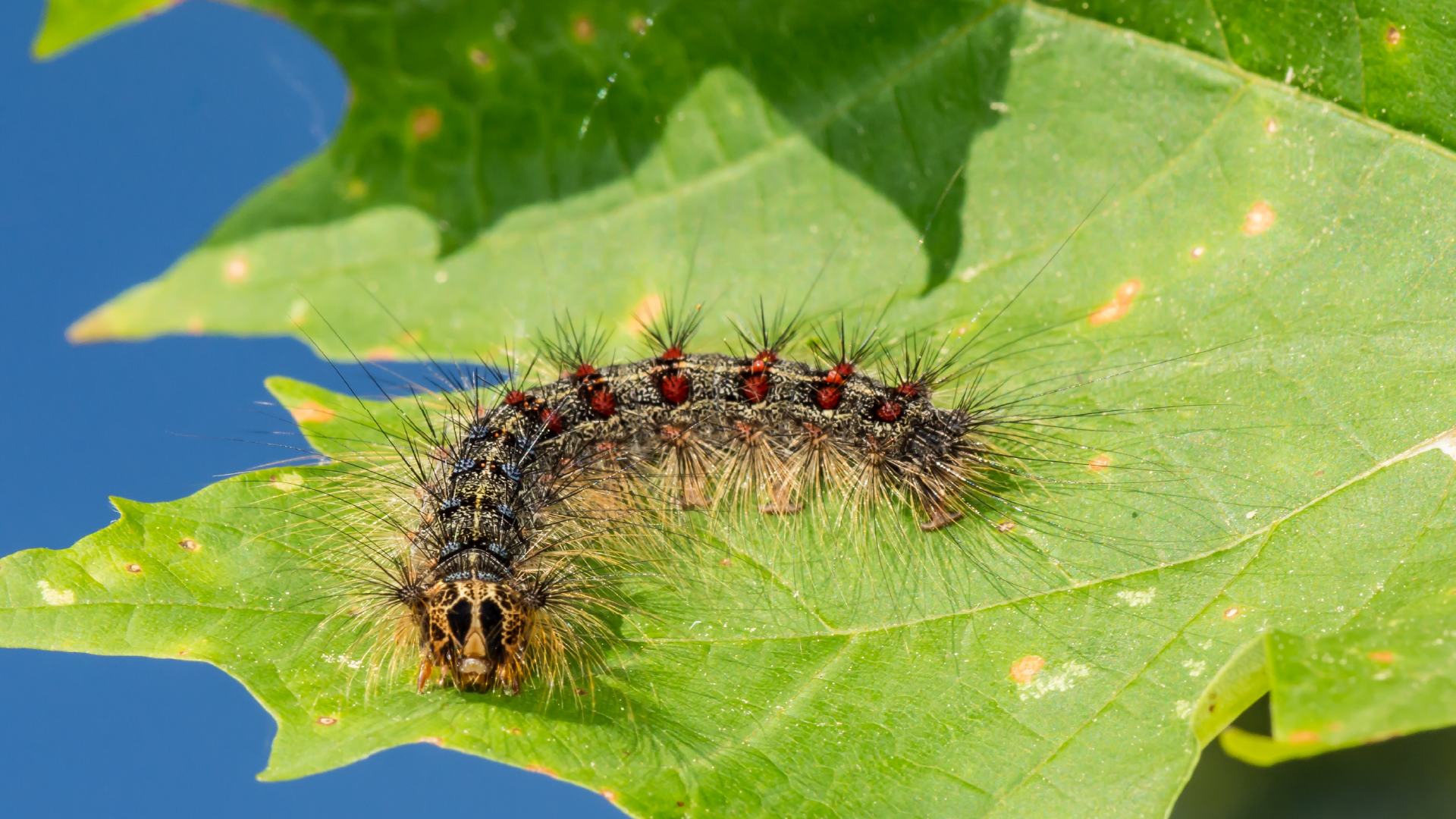
Caterpillars Identification
During their early stages the caterpillars are capable of airborne dispersal using silk and are around 1/8 inch long with a brown color. When the caterpillars mature, they turn into a mottled dark gray, which can also vary from yellow to black, with two rows of blue and red spots on their back. The size of the matured caterpillars range between 2 to 3-1/2 inches long.
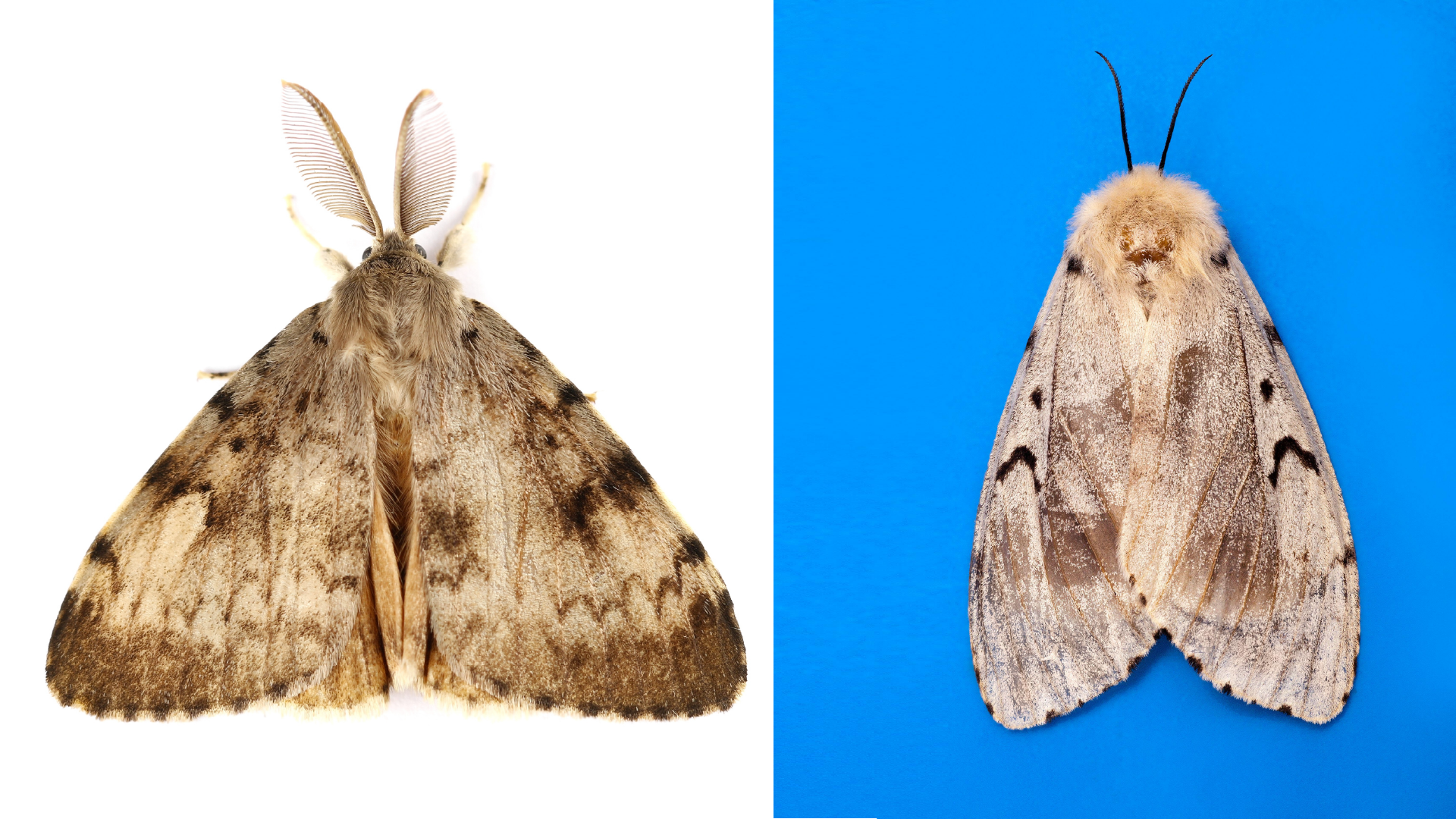
Adult Spongy Moths Identification
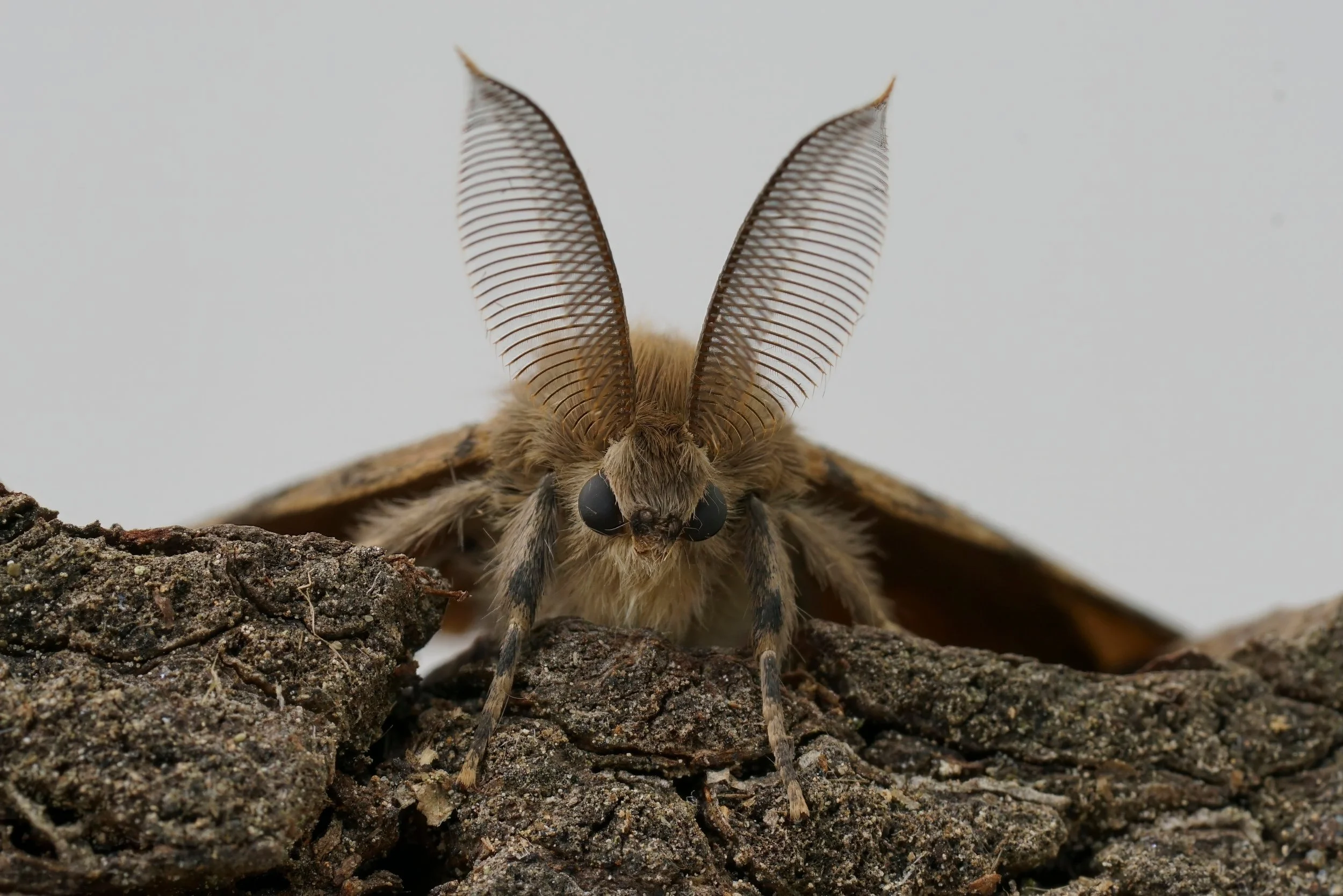
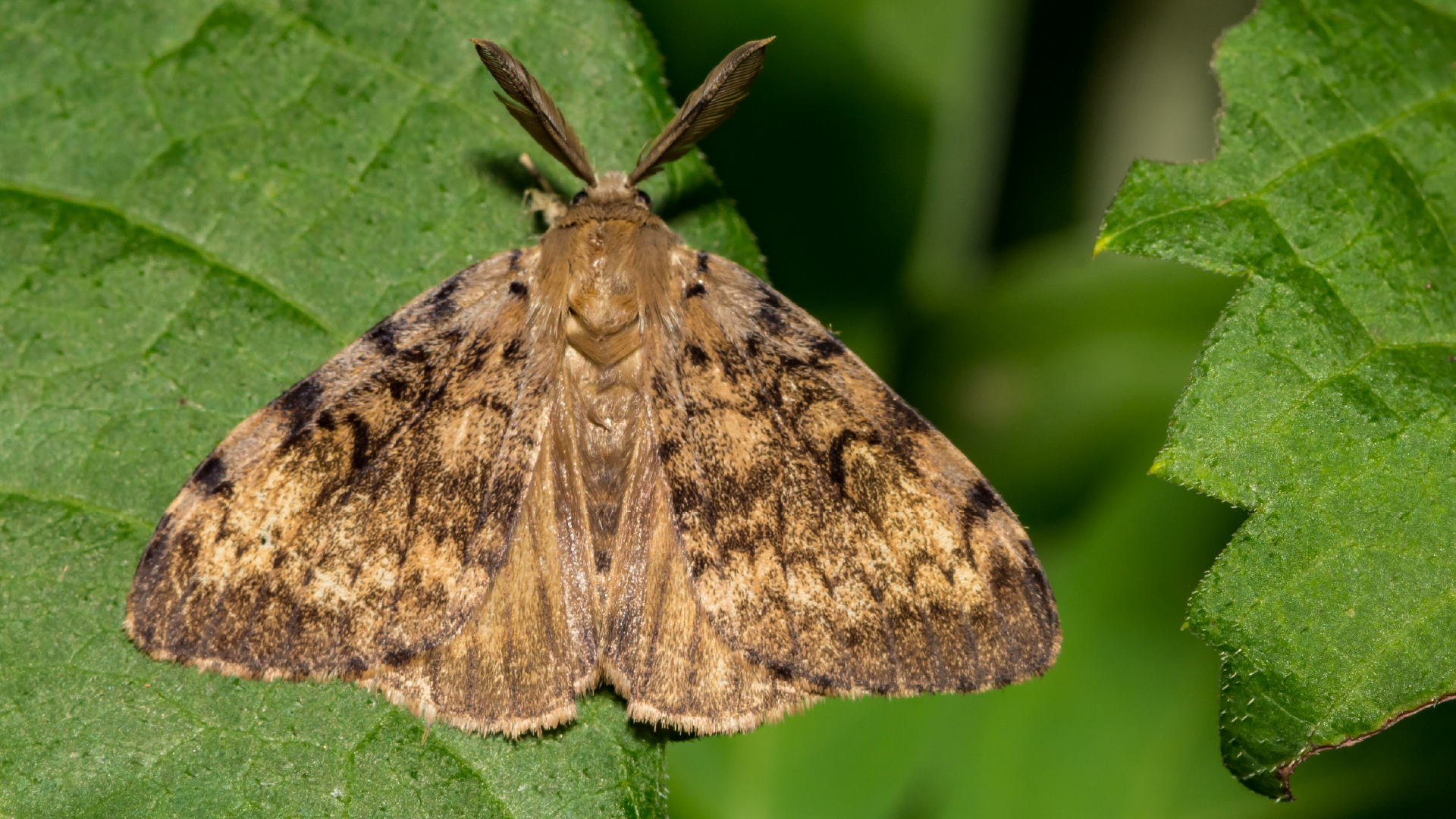
Male adult spongy moths have gray-brown wings, with a wingspan of approximately 1-1/2 inches. Females are white and larger than males, their wingspans can be up to 3-1/2 inches. In addition, adult moths are attracted to light, and are more active at dusk.
For more details about FSMC please refer to the CFIA and APHIS websites below:
https://www.aphis.usda.gov/plant-pests-diseases/flighted-spongy-moth-complex?utm_source=chatgpt.com
Resources